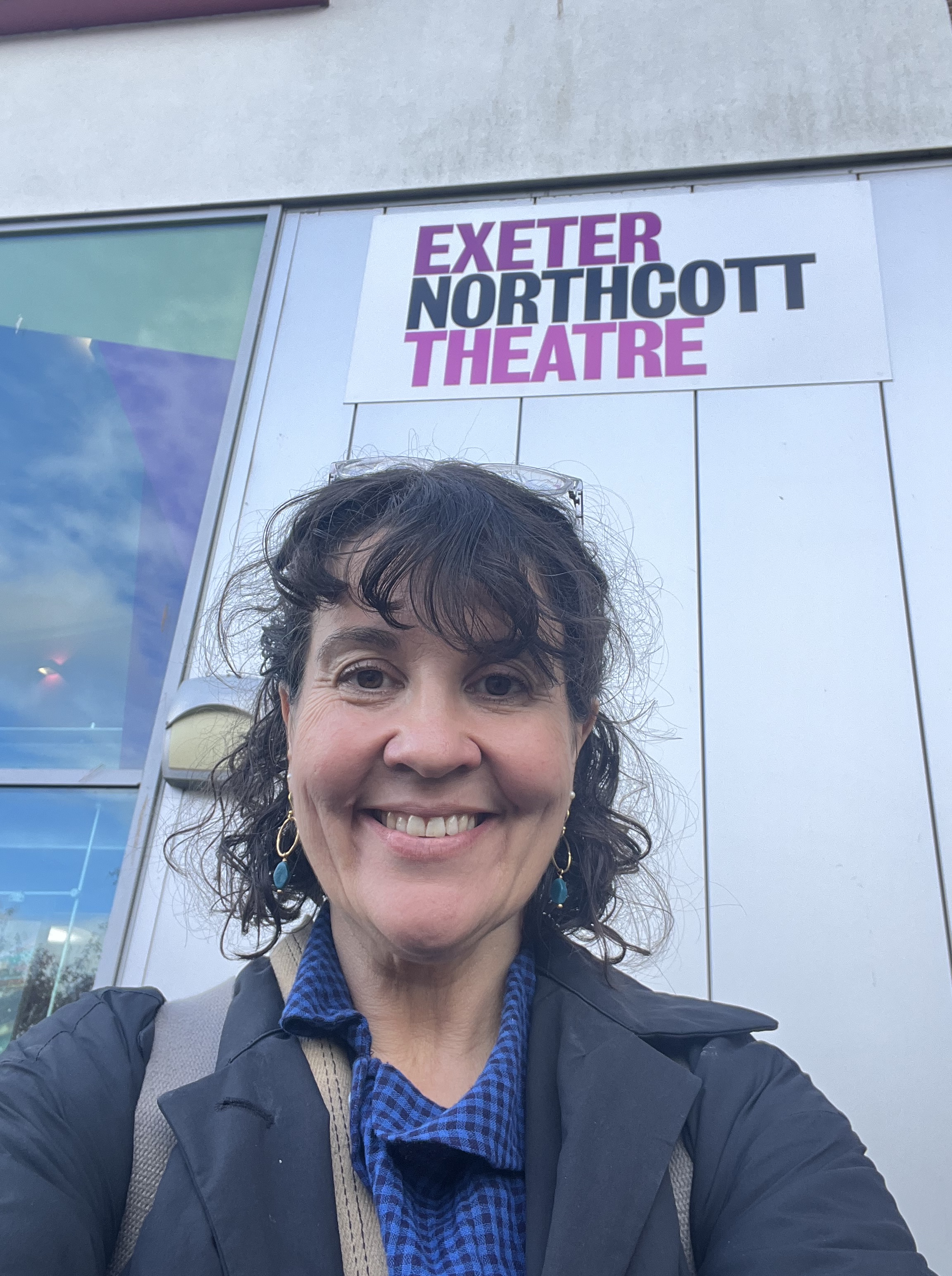
It’s been a pretty difficult summer and as a result I have been very behind in my research and writing for my Playwright73 residency with Exeter Northcott and the Globe. I am writing another history play, focussed on a medieval Cornish heroine, and it takes part both in the South West and London over a fifty year timeframe. I’ve been doing some brilliant research, aided by some great historians including Prof Matthew Davies at Birkbeck, University of London, Mark Stoyle at Southampton and Prof Jane Whittle at Exeter University. I’m also working with a Cornish Language expert, Elizabeth Ellis, who I met when I was part of the Endelienta Cornish Language residency in July. My plan had been a summer of research and writing, but a big family crisis had other ideas and had pulled me away from everything for several months. Everyone has been super supportive and kind, but I wanted to find a way to still honour the day with actors that the Globe and Exeter had offered me – so over the last three weeks, punctuated by other duties, I’ve managed to get the bones of a first draft out of my brain.
I’ve always had a brain that has fizzed as a dramaturg and playwright – story just leaks often – but since this summer’s difficulties, my imagination has felt really limited: like there’s a hard stone wall between me and my ability to dream. Getting through a quick first draft felt like an enormous slog – trying and failing to take a sledgehammer to that wall and actually realising I had to just work camped outside it, hanging off it – but I persevered, because I knew that talking about the idea wasn’t what I needed – I need to have something there, something tangible, no matter how delicate, that offered a possibility and life, that enabled collaboration (which is where I always come alive).
It was the right call. A brilliant day with Cornish and Devon actors Chloe Endean, Edward Rowe, Jack Brownridge-Kelly, Elaine Claxton, Katherine Morrant and Ben Callon, alongside the wonderful Martin Berry from the Northcott, Guy Jones from the Globe and Cornish Language expert Elizabeth Ellis, was galvanising even if it felt vulnerable. The energy, enthusiasm and possibility has really helped me feel like I can get back into my rhythm. I am so grateful for The Peggy Ramsay residency for enabling me, especially this year, when things could so easily have drifted and I’ve felt quite scared and small.
I’ve much more to write on the process and piece. But today, it’s this gratitude I am sitting in.
Morgan Lloyd Malcom’s Substack is an important intervention in the demystification of the performance writing craft. Weekly she hosts a playwright/ dramatist who describes their writing day – in all its honesty – the things that help them, things that get in the way. I love it as a constant reminder to me that writers write in all sorts of ways, face all sorts of barriers external and internal, and find all sorts of ways to overcome them. It is a source of inspiration, solidarity and learning.
So today I was beyond thrilled that the wonderful Jane Upton, whose plays I’ve been working on over the last few years, mentioned me and our dramaturgical relationship in her entry here.
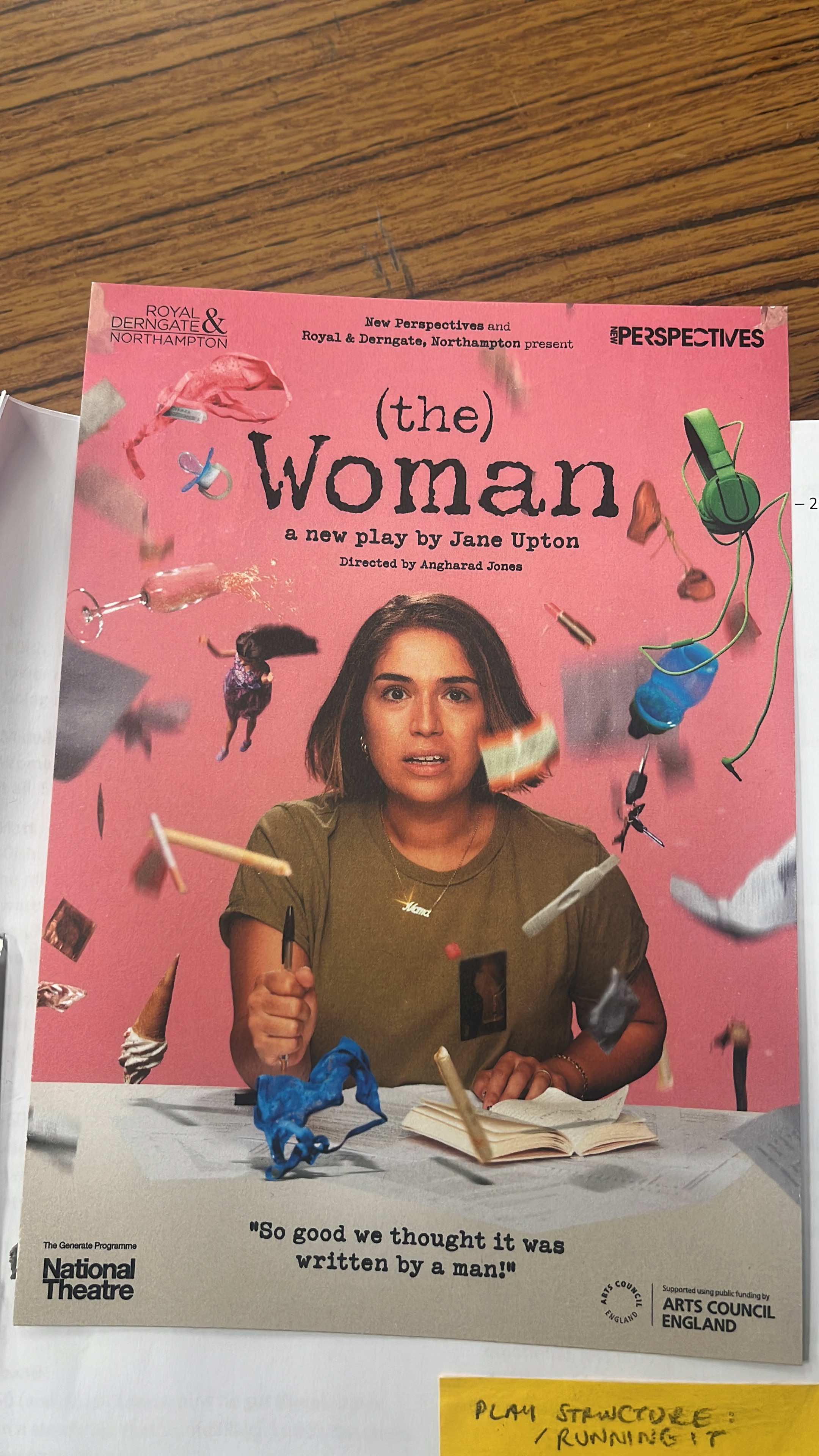
Almost as thrilled I was by the FIVE star Guardian review for Jane’s extraordinary play, which I dramaturged, produced by New Perspectives and currently running for another week at The Park.
What interests me across all my work as both a dramaturg and a playwright is how we not only tell women’s stories but how we interrogate with rigour who is telling that story, what stories are feeding into them and the angle from which a story is being told. It’s about depth and process and a constant vigilance around the ways in which our understanding of ourselves has been shaped through centuries of storytelling in which we were not involved in the recording or the selection.
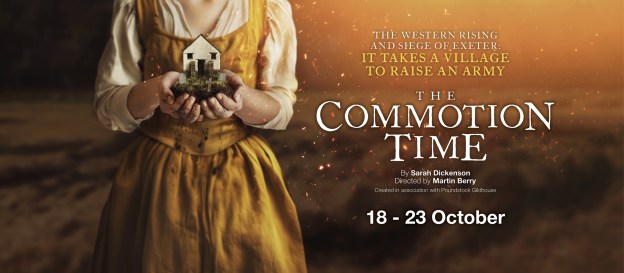
I have been hugely inspired this year by Philippa Gregory’s book NORMAL WOMAN, which demonstrated to me how limited our popular storyhoard is in representing the historical lives of women: the upshot is, we don’t properly know who we are only who we have been told we are. I spent years for my play, the Commotion Time, trying to justify in my scene shapes putting women in key community roles in C16th only to discover through Katherine L. French’s brilliant study “The Good Women of the Parish” that their roles in parish institutions almost perfectly mirrored those of the women in parishes today – combining busy work and home lives with parish duties including organising events and leading wardenships. When I took back the play to the good women of the parishes of Poundstock and Week St Mary earlier this year, they were joyful at being represented on the page in a way they recognised as anchors and makers of community experience, and not in the way they’d expected, as subordinates. Then as now my story represents them as individuals fully engaged in the protection of their community institutions and the protests against their repression: the patriarchy existed and women’s lives were policed by it, but the variety of female experience, resilience, power and roles within society was not only wide but potent, active and impactful.
I started writing The Commotion Time twenty years ago, when Sandy Dingle, who with her husband Tim headed up the renovation of Poundstock Gildhouse, asked me to explore how a play could be written and performed as part of a renewed cultural offer for the building they were restoring. The renovation that Sandy and the other members of the committee oversaw was so successful it, according to the motion tabled in Parliament in 2012, “ was one of only three grand prix winners from across Europe in the 2012 European Union Prize for Cultural Heritage and Europa Nostra awards; [for] the restoration and preservation of the Gildhouse; and its [encouragement] of people from across the country to visit and experience one of the medieval days run by the local community throughout the year. Sandy, a former teacher, travelled to Portugal to receive this award from Placido Domingo. Thousands of local children now know more about themselves and their history as a result of the work she and the team had done and, incidentally, only this week was awarded an honorary degree from the University of Bedfordshire who determined that all women who earned PE teaching certificates from the Bedford College of Physical Education had in fact done the equivalent of a university degree. When I think about the impact that Sandy has had on her local community, young people around her, the church, our collective history and, on me as an artist, I think about the extraordinary activism of commitment and belief in people and place and our collective heritage and identity that she was curating, and other women like her continue to curate.
The Commotion Time has a run of only 7 days in Exeter this month, but the work to prepare it has been done by normal women for months and years: the women in a community choir who are learning new music, the women in the community chorus who are turning up every week committed not only to the experience but the importance of telling this story, the women in the Poundstock Gildhouse and surrounding parishes who have helped me to develop the play down to individual lines to ensure it represents and tells the truth, the women in the artistic/ producing/ marketing/ finance/ management/ everything teams at the Northcott who are supporting the telling of this story, the women in the professional cast who are making this play in a shorter time with such commitment. This is a great, collective act, of story making – a collaboration between hundreds of women – and people of all genders – harnessing their skills and passion and faith, to tell a story that has been all but forgotten from perspectives that have all been forgotten too.
And it is this great collaborative act of storymaking which The Commotion Time is about and this project is about too. Because The Commotion Time isn’t about my individual voice as a playwright – although it has been harnessed to shape and bring together the story – but is about the power of that collectivism and the challenge to us all in times of the polarisation of centralised change, of rebuilding our stories together.
The brilliant Brene Brown writes that “in the absence of data we tell stories”. I believe that our historical stories as women have been at the mercy of this absence of data and the stories we have been left with as a result. I also believe that the inaccuracy of data not only about the nature of women’s lives, but also the nature of their processes and the ways in which they produce and create, has also led to a set of stories that we live by but have also restrained us. Take for example the story about women not having enough confidence – the story goes that we need to be more empowered and we need find ways to build our confidence. But what if that lack of confidence was seen as a perfectly rational response to a system which didn’t enable you? I was recently diagnosed with ADHD after my son’s own diagnosis – one of thousands of women in their 40s misdiagnosed with depression/ anxiety when their neurodivergent signs were not noticed. Through my diagnosis I’ve begun to understand that my high sensitivity to rejection is part of my neurodivergent wiring and is a perfectly rational response to a world fraught with dangers. I’ve always been told I am too sensitive, but actually I am highly sensitive. I’ve always been told to be less sensitive. I can’t be. It’s my programming and denying me that essential part of myself also denies everything that makes me the creative I am. The alternative response is to acknowledge what my sensitivity is telling me and then working out how to manage that – and so as a dramaturg often working with women like myself, whose symptoms can be accentuated by menopause and other hormonal changes, I see suddenly that many of our artistic development system often don’t provide us with the tools we need to build our confidence – not in ourselves – but in the work we’re making. Doing that is straightforward – it’s about dialogue and checking in and other systemic changes that understands that the highly sensitive brains we need to see, document and change our worlds, need careful and connected and curious (more Brene Brown) systems to support them. This isn’t about mitigations, around 20% of us are highly sensitive, this is about systems that everyone benefits from.
So in my work I am conscious that not only are women’s stories not being told, but that when they are there can be a lack of data behind those stories because the premise upon which we understand women’s historical lives in our society incomplete and, often, the ways in which women are facilitated to tell their lives and stories are not always designed for them. As a writer and dramaturg, I am working across these things – with local communities (both on The Commotion Time and as part of O-Region’s From The Horses Mouth Project), on new productions of historical work with female playwrights seeking to unearth women’s stories (Princess Essex by Anne Odeke at the Globe and the Women’s Prize For Playwriting winner, Intelligence by Sarah Grochala, for Ellie Keel and Paines Plough), as a co-writer (on new musical Everything’s Fine with Sam Hodges and pop writers Miranda Cooper, Jason Pebworth and Jon Shave) and dramaturg of contemporary work by female writers (The Woman and Belongings by Jane Upton, Wrestle Lads Wrestle by Jennifer Jackson). All of this work is interconnected both in its focus on women’s stories and, critically, the process by which is realised.
When I listened on audiobook to Philippa Gregory’s description of how, after the black death, women and men had equal pay in England – I felt a moment of absolute rage (rage that kept coming throughout my listening to that book and its documentation of the control of women for centuries) – it dawned on me how powerful a control this forgetting of ourselves was. Similarly when I received my own ADHD diagnosis last year I had rage too – this time because I realised that I had not really belonged to myself for many years because I fundamentally didn’t understand that my brain was different – only that I was a bundle of shameful diagnosis of depression, anxiety, low self esteem, over-sensitivity, extreme pmt, post-natal depression and so on. The Commotion Time comes at the end of my own Commotion Time at a time when I finally feel like I belong to myself as a neurodivergent person and as a woman whose history is more nuanced and complicated that I could every have imagined. These things have empowered me and I am now determined in the work I do as a playwright and a dramaturg to continue to harness and evolve this understanding so others might be too.
‘The story is not told to lift you up, to make you feel better, or to entertain you, although all those things can be true. The story is meant to take the spirit into a descent to find something that is lost or missing and to bring it back to consciousness again.” Clarissa Pinkola Estés
Dramaturgy is the biology of a piece of performance, an eco-system of living storytelling generated by the ever evolving and intersecting creation, vision and interpretation of writers, actors, designers, directors, producers and audiences within the particular habitat of time and space it is being made. This ecosystem is constructed through the processes, individual and collective, of the people within it and in turn those processes are driven by their values and experience: the sum-total of everything they are and have been in that moment. The work of this ecosystem drives towards the organisation of a work which is impactful and meaningful to those who watch it.
As a dramaturg I am concerned with the support of this system, its people and the processes within it. My role is situational, shapeshifting according to the stage of discovery the piece is in and whose dramaturgical interpretation is predominantly at play at any moment, but always it is about holding the space for safe, rigorous and joyful enquiry into making the work the most it can be determined by an underlying understanding of how the system as a whole is working. This sounds lofty, but in practice it’s deeply practical: a cup of tea with a writer to explore the possibilities of an idea, building an understanding of a play’s lens through drafts and open-hearted questioning, supporting a director in a rehearsal as they seek to bring their own storytelling together with the original material, supporting a producer in making hard (or easy) decisions about programming or production, bringing together a body of research to super-charge a rehearsal room, giving someone a hug when they feel overwhelmed and lost – or challenging the system itself when its component parts are no longer in synthesis. It’s a care-full role – one that listens, reflects, holds, notices, reassess: it is compassionate and empathetic, courageous and truth-seeking – I think it’s full of radical, shame-slaying, vulnerability-holding, world-changing, love.
‘The story is not told to lift you up, to make you feel better, or to entertain you, although all those things can be true. The story is meant to take the spirit into a descent to find something that is lost or missing and to bring it back to consciousness again.” Clarissa Pinkola Estés
As we become more and more conscious of the true nature of our diversity as a society, the wide range of experiences within it and better understand the oppression by dominant cultures of that diversity, so we become aware of how much has been lost or missing in our story telling and our theatre culture: how little we tell of human experience, how narrow our definitions are, how small we are in our ambitions and vision, how much that limits us. Meanwhile a culture war is raged by those I believe are determined to bring us back together under a redundant nineteeth century tale of English exceptionalism. Story is the weapon of choice and its disruption a key tool in the battle against the progressive forces which threaten the powerful. The result: disorientation, conflict and ever-fractured opposition as we struggle to unite ourselves under a unifying twentieth-first century story of who we are and who we hope to be and how we can get there.
We have lost our collectivism and connectivity, and we know we need to reclaim it – but in a new way, not an old: as storytellers, storymakers, storyfinders we find ourselves in possession of powerful skills. I believe we need to deploy ourselves, organise ourselves and drive a revolution of counter-storytelling which builds and intersects into a body of work strong enough and powerful enough to enable the many, not just the few, to see themselves and be seen. Stories that not only document our lives, but reimagine them. Acts of storytelling that collectively build towards new understanding of ourselves as a people, as a country, as a world. To return to Clarissa Pinkola Estés:
‘The story is not told to lift you up, to make you feel better, or to entertain you, although all those things can be true. The story is meant to take the spirit into a descent to find something that is lost or missing and to bring it back to consciousness again.”
I believe every one of us deserves to experience the power of story in this way.
We cannot take our storytelling work for granted: A story either upholds or challenges a status quo. We need to be honest with ourselves, with each text we consider and each interpretation we make of it, about what the currency of that story is in the world – what it upholds and what it suppresses. This is not the work of individuals, but of coalitions, working together in ways that prizes and enjoys difference. This is not about single plays, but about the ecosystem of theatre-making and the storyhoard it builds for us to draw inspiration from. We don’t have to answer these questions before we make, but rather find moments of reflection and assessment throughout our processes, where we ask ourselves the most challenging questions.
We stand in a moment of immensity, a moment of overwhelm and a moment of opportunity but it is also a moment of destabilisation and disorientation as many of us charged with the curation of storytelling become aware that we haven’t the tools or the experience or the resource to do the work we have done comfortably for a long time and have expectations around. Once you clearly understand that elements of your practice are supremacist, are racist, are ableist, are mysognynistic, are homophobic, are transphobic (as elements of mine are) you feel the urgency to change your practice. There’s introspection, and fragility inherent in this journey. It requires a process of adjustment, but how can that process be completed when you have to turn up to work the next day? How do we undertake this work without placing more burden on those already worn down by the systemic prejudices they face? How do we become effective allies and move beyond to honest coalitions? How do we make space? How do we let go of power, when we feel that our power has been so hard won? How, on limited resources in the midst of a pandemic and a society in economic turmoil, do we do the work we need to do with the care we know it needs? How do we not burn out? How do we keep everyone in the room, safe?
If we are truly serious about making work that is representative. If we are truly serious about building a theatre system that has justice at its core. If we are truly serious about building a body of story in which every person in this society has the opportunity to either been seen or see themselves differently – then we cannot look at the work alone. We have to look at the system that creates that work, the values it is built on and processes it uses, and be rigourous in our approach to changing that system, so that everyone within it can be held safely, bring their whole selves and make the stories we so desperately need to thrive.
It is huge and overwhelming work, but by holding space and process and through a million acts of discovery and getting lost and re-finding ourselves again, I believe that together we have the power to move through it with courage and curiosity. And this is what it means for me to be a dramaturg right now: standing alongside others committed to the same work as me – humble, with only myself to bring, willing to serve, to collaborate, to move from the macro to the micro, to stay within the difficulty of it, to get it wrong, but to stay curious, courageous and kind.
So this is a little update of what I did and discovered after I blogged about this last week.
I deleted all the notifications off my phone and ipad
I left my phone and iPad downstairs at bedtime and set an alarm on my watch instead
I deleted the social media apps off my iPhone and ipad and I’ve limited 12 apps to my home screen which are the ones I really need (and put the others on second home screen in folders)
I re-installed the Moment app which immediately put me onto bootcamp and a series of actions every day….
I’ve not taken my phone with me when I’ve left the house unless I knew I needed it.
I made Mum promise to call the landline if things were urgent overnight.
ALSO:
A brilliant friend wrote me a LETTER and it was incredible….
What I’ve discovered in my experiment so far:
It’s extraordinary the difference it makes not having notifications on your phone or the little red badges that tell you how many unread emails etc. It makes the action of checking a deliberate moment, rather than an urge.
I’ve read most of a novel this week which I wouldn’t have done if I’d had my phone or iPad in the bedroom. I feel wonderfully engaged in the imaginative world and excited for bedtime so I can go back and read more again. (Pat Barker’s Silence of the Girls if you’re interested)
Nobody contacted me over night with anything urgent.
It was extraordinary to have a disconnected hour before I went to bed and not to check my phone until I went downstairs in the morning. I really, really felt the calm of that disconnection and I realised that that downtime was crucial to my resilience when problems arose. It felt odd, but good.
The Moment Bootcamp is brilliant and I really recommend it – it’s very very simple, easy, non-scary actions every day to wake up your sense of boundaries on your phone. https://inthemoment.io
The sense that I needed my phone “in case” was contributing to a sense of anxiety that something could happen any moment. That’s true, but real emergencies will elicit a phone call.
Regarding news: I read a really good article by the people of The Correspondent which I’ll speak about another time. What’s stuck with me is this though, news matters if it changes your behaviour or leads to an action on your own part: how much of the news we digest does that? How accurate is the picture of the world we live in as described by 24 hour news outlets?
I feel as connected as I have always done…
I feel a little freed of something I hadn’t realised was so constricting: like when you suddenly realise your bra is a bit too tight.
But this hasn’t been total abstinence:
I’ve been on email.
I’ve been on Facebook.
I’ve been on Twitter.
I’ve begun to notice when I’m time wasting.
And… last night I did break one of the experiments and ended up on a Twitter wormhole late in the night due to Trump’s parade outside the hospital. I was really aware in my head that this was a huge example of how my attention was being caught – instead of reading my delicious novel, I was randomly searching for more details about whether the President was really ill or not. I’m not saying that this isn’t interesting on a political level. But why did it warrant so much of my time? And my anxiety? Could it change my behaviour or lead to an action? Not really: it’s just left me feeling manipulated, confused and disempowered.
What do I need my relationship with that kind of news to be?
I’m going to keep experimenting this week and see what comes up next. Today’s bootcamp is to call someone rather than text them and listen to their voice…. I’ve already done that a couple of times this morning and yesterday I baked a whole fish pie with my Mum on the phone like I used to do in the old days… it was lovely.
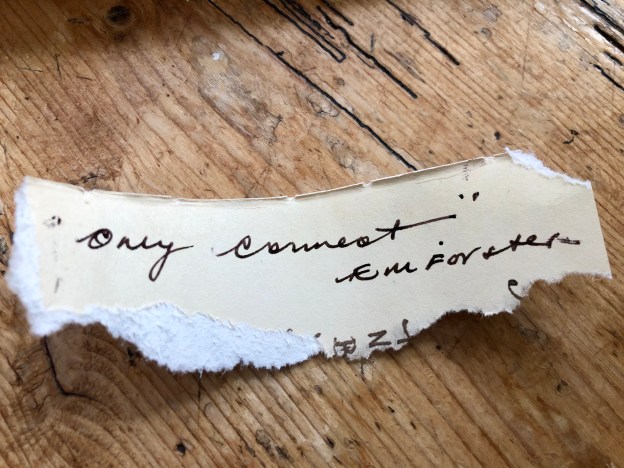
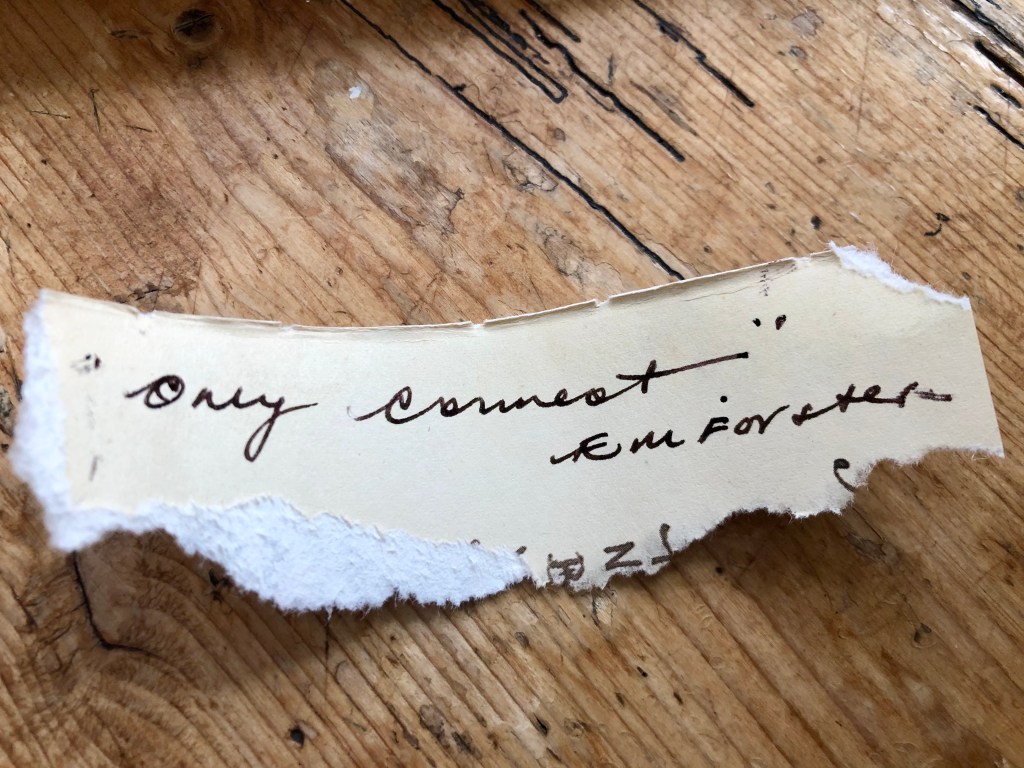
When I was a teenager I used to write quotes from books and things in brown ink on scraps of paper and stick them on my wall which was also covered in black and white photos and Impressionist postcard. My favourite was always this from Forster:
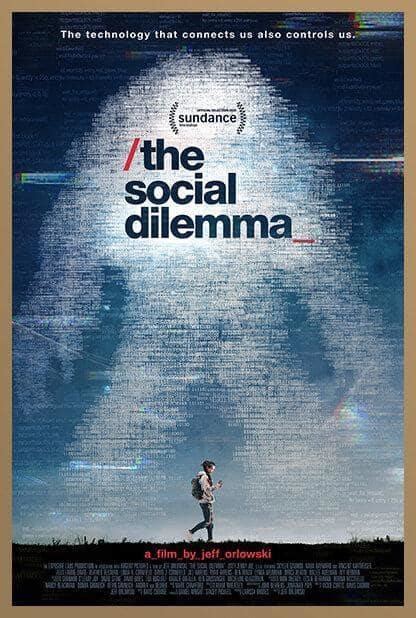
I watched this film on Netflix last night and it’s already a topic of conversation amongst many of my peers. If you’ve not seen it, the documentary features testimony from ex-silicon valley engineers, academics, venture capitalists and psychologists describing the business model of social networking sites and their impact on our society. Simply put, as users who do not pay we have become the product of these sites and their algorithms are programmed to ensure our continual engagement and affect our behaviour choices. Whilst offering many benefits, this deep, unconscious interference with our psychology is playing havoc with our social cohesion and mental health, as bad actors are able to harness this technology to their own ends. The conclusion is that we have to work together to demand a change in the way the these sites operate and are regulated. In the meantime, by limiting our screen time, turning off our notifications and keeping our kids from social media before they’re 16, we can limit the individual impact on our private lives.
So much fired off in my head watching this. I am a social media user: I’m on Facebook, Instagram and Twitter. I am on them too much, I know. But as an introvert, working from home, with family and friends all over the world, these sites have definitely benefitted me: they enable me to keep abreast of professional contacts and developments, they enable me to curate long-distant friendships that would be lost in another way, the enable me to connect with others when I am often isolated working from home. I can really credit my social media accounts for re-connecting me with old, loved friends. I can credit them with helping me to make positive changes in my life – supporting my running ambitions being one of them (being cheered on and accountable has been amazing). I can credit them with enabling me to reach out or be reached out to. I like the connection, the human connection, that I have with them.
And it does feel human when dear, dear, old friends reach out and support me.
When I watched the show yesterday I felt I should delete my facebook account. I should try living naked, without it, much in the same way that I’ve been living naked without alcohol for the last few months. Not only would I no longer be supporting a website with serious ethical flaws, a space that is dangerous even, but I’d also be releasing myself from its hold which I know is too much….
But it’s SO useful too: the communities I’m a part of like Run Mummy, Run or Mummy’s Gin Fund…
And I love being connected to people I just wouldn’t be able to keep up with in another way: knowing how they are.
But the problem here isn’t these things. It’s the addiction. It’s how much. It’s the random, interruptive nature of the phone there, waiting. I’ve been on facebook for less than a quarter of my life and I already can’t imagine what I’d do without it. I have a genuine sense of panic about what life would be like without that connection.
Which of course, is the point in the first place. And it’s not my fault I now realise.
And there’s the ethics….
So what do I do?
I’ve learned from other addictions I’ve beaten (smoking, alcohol in process, snake on my nokia phone…) that the solution to anything like this, isn’t willpower. Willpower runs out, it creates conflict in your mind, you can’t succeed all the time the conflict is there. The solution is properly wanting to change and making positive choices and decisions around it. It’s not saying I’m never going to use social media again, it’s saying “I’m going to experiment with not using it” and finding out what that might look like, I’m curious about what my life might look like if I put these tools into their rightful place in my life.
Some of the questions that throws up is:
How do I keep in touch with friends and family even when I’m super busy?
How do I keep abreast of things that are going on in my industry?
How do I keep abreast of politics/ news/ things people are saying?
How do I link up with the people who inspire me?
How do I access local parents networks?
How can I share to a wide audience?
If my phone isn’t the bedroom, what happens if someone tries to call me in the middle of the night and i don’t hear them?
What could I do with the time I spend on social media now?
How can I keep in touch with friends without social media? What if I spent the same amount of time say… writing this blog? Or emailing people? Or writing letters?
What happens if I’m forgotten? Not seen?
What are the other networks I can access offline and be a part of? I already have many?
How much of my connectivity is actually through social media anyway?
How much power do I have to change things in this world? How do I reach out and harness that power now, without these tools?
How can just me removing myself from a site change its ethical stance? How do I become part of the bigger change needed without losing my presence in the process?
I feel like I need to start a process of uncoupling from what I’ve allowed social media to curate for me. I need to work through these questions and begin to explore different answers.
I’d love to know what other people’s feelings/ experiences/ thoughts are around all this. It feels knotty to me, I feel like I’m being naive, weak, with blindspots. I know there’s an irony perhaps in that I am writing this in a blog… But the act of doing so feels hopeful too…. because it feels like the start of reimagining the relationship and gaining power back again.
There’s another thought, though, that connects to this, which I’d like to think about more before I explore here and that’s the relationship of art to this dilemma. And the link of this to the erosion of our public spaces/ connections (cf Jenny Odell’s work on resisting the attention economy… another blog coming very soon)
First up I’m going to find out more. I’m looking at the Center for Humane Technology, Moment and others in the hunt for the hopeful, future ideas…. more anon. Because we have to have a new narrative for connection.
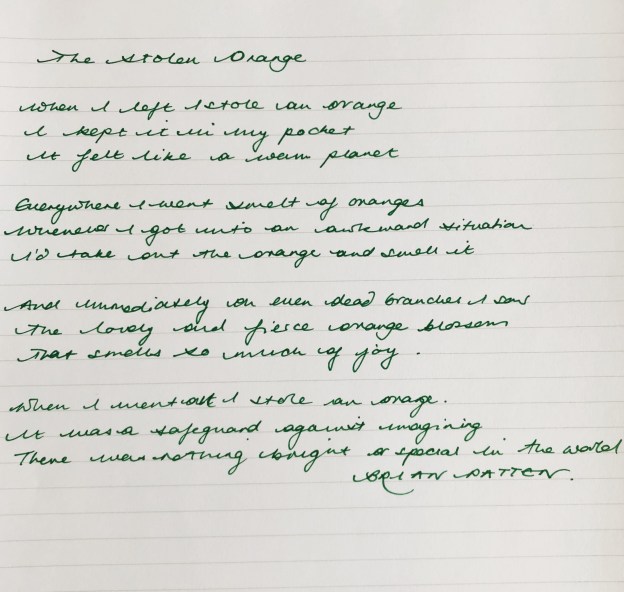
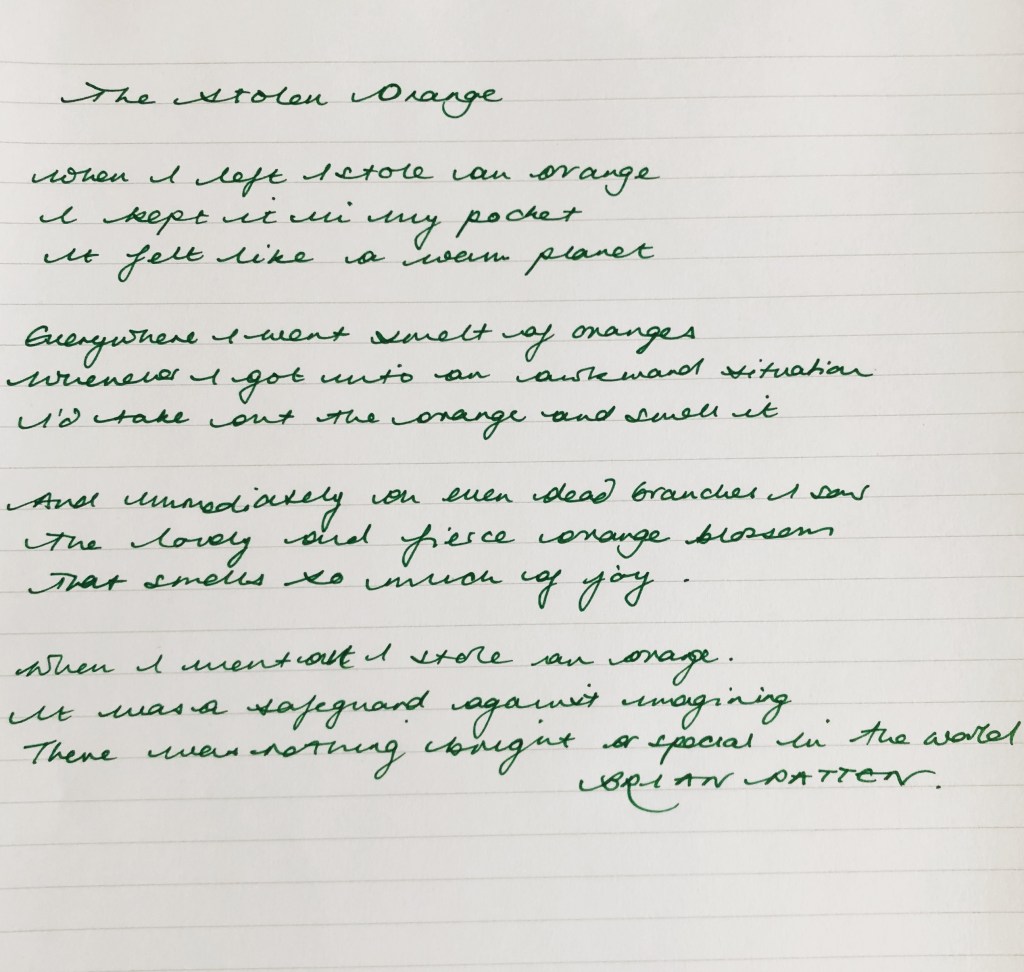
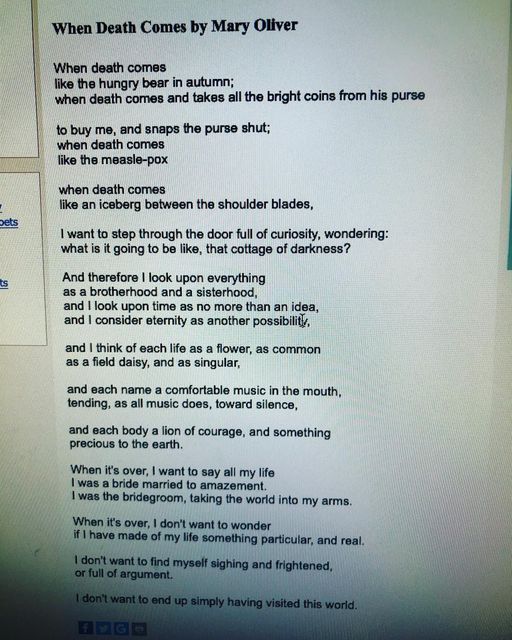
So after I posted yesterday on Bregman two pals exchanged me poems that have hope within them for them: THE STOLEN ORANGE by Brian Patten and WHEN DEATH COMES by Mary Oliver. Here’s a few incomplete thoughts on how they’ve struck me today very much from my own perspective.
Both poems hold wonder as a talisman against inevitable darkness. In Patten’s poem a stolen orange in his pocket which feels like a ‘warm planet’ soothes awkward situations with its scent and promises spring on the most barren branches. I love the closing lines “It was a safeguard against imagining/ There was nothing bright or special in the world”. It reminds me both of how much of our realities is the product of our own thoughts but also how essential the symbols of hope/ rebirth/ beauty are even in the dark days.
Mary Oliver’s poem imagines her meeting with death. But rather than meet it with fear, she meets it with curiosity and wondering. In order to achieve this, she writes, she embraces the connectivity of everything and possibility – she recognises the limitations of her own understanding and settles into amazement. I think it’s a breathtaking poem.
"When it's over, I want to say all my life
I was a bride married to amazement.
I was the bridegroom, taking the world into my arms.

When it's over, I don't want to wonder
if I have made of my life something particular, and real.

I don't want to find myself sighing and frightened,
or full of argument

I don't want to end up simply having visited this world."
It makes me reflect on my privilege and my markers for success and how embroiled I feel in a system that doesn’t liberate me (or I find myself unable to liberate myself from) and certainly doesn’t liberate most to properly embrace this connectivity. She captures the preciousness of our individuality and the collective power of our insignificance. She pans us out into the biggest of pictures and then back into the core of our hearts. She calls us back to the meaning of our community with one another. And yet, within in the writing – the desire expressed in the ‘I don’t want” she also expresses the struggle to do so. The constant, daily endeavour, the work, of finding hope: of approaching all things with curiosity, wonder and joy.
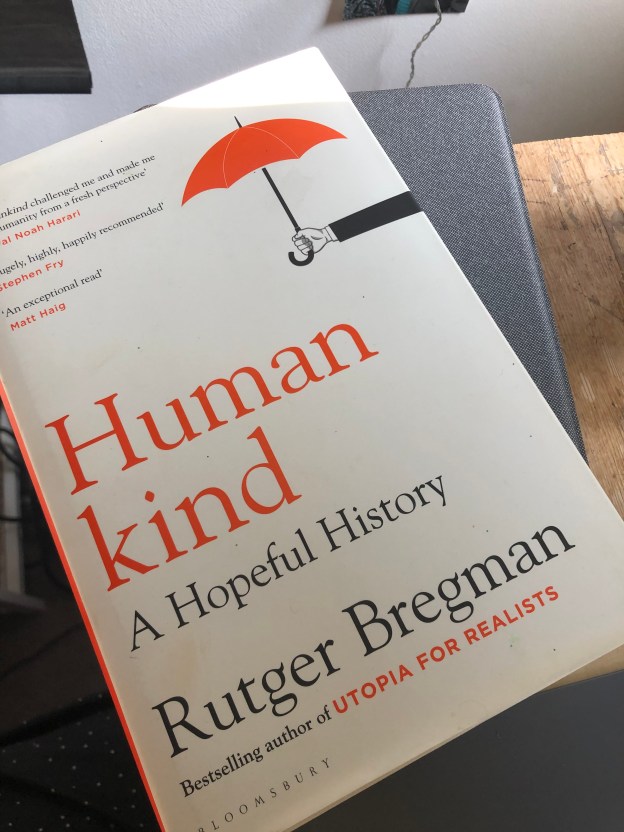
This is Bregman’s follow-up book to Utopia for Realists. The premise of Humankind is that rather than what we’ve been taught, that human beings are inherently selfish, actually human beings are naturally decent and kind – and in order to be able to survive we’ve had to be. The outcome of this isn’t simple, however, and the book is impressive in its nuance and complexity. Bregman forensically unpicks some of the big narratives that we hold on to that tell us the contrary – from the fiction that is Lord of the Flies, to the real fate of Easter Island, to the experiments of Stanley Milgram and the Shock Machine. What he discovers again and again is how it is the way that the narratives have been constructed (and the motives of those constructing them) which have controlled their meaning and our beliefs about ourselves – beliefs that actually often work against our own lived experience. There’s surprises too – the role of empathy, for example, in blinding us to suffering for example. I’m not all the way through yet, but it’s a really inspiring, galvanising read so far….. I’d love to know what other people think?
I’ve just mooted this on my Facebook Page and decided to rename my blog here in its honour. I don’t know if it’s a good title. But…. hey…. it’s what it is.
As the pandemic continues, painful, profound in its interruption – I finally find myself looking outward after a period of intense self-reflection.
What I know is that there are ideas out there which are full of hope and possibility. I want to know more about them, collect them, build new narratives and visions.
So as a starting point… I’d like to collect them here.

 Sarah Dickenson